Skip to content
Field Trip to Winsford, Cheshire, March 2025
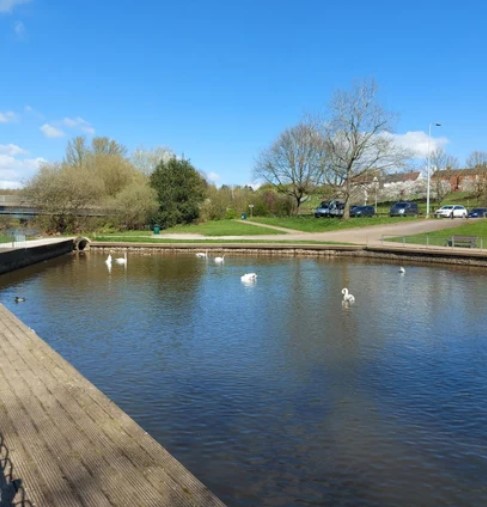
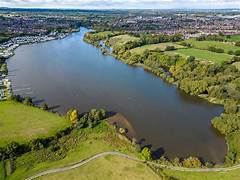
- Winsford Marina is on the River Weaver at the north end of Bottom Flash and was widened by salt subsidence 1845-1872
- The island was created by cutting off the River Weaver to make way for the Weaver Navigation canalisation for sea-going salt trade vessels
- A54 westbound bridge over the River Weaver was built to help cope with subsidence
- The Red Lion opened in 1763 but was demolished in 1887 due to subsidence. The present building was constructed using a black, wood-framed structure to allow lifting and jacks in the event of subsidence
- Looking south to the eastbound A54 bridge, parts of the former structure can be seen under the present one. (The 1897 iron girder bridge was rebuilt in 1928 and again more recently). Red sandstone abutments - dramatically tilted - are clear evidence of subsidence
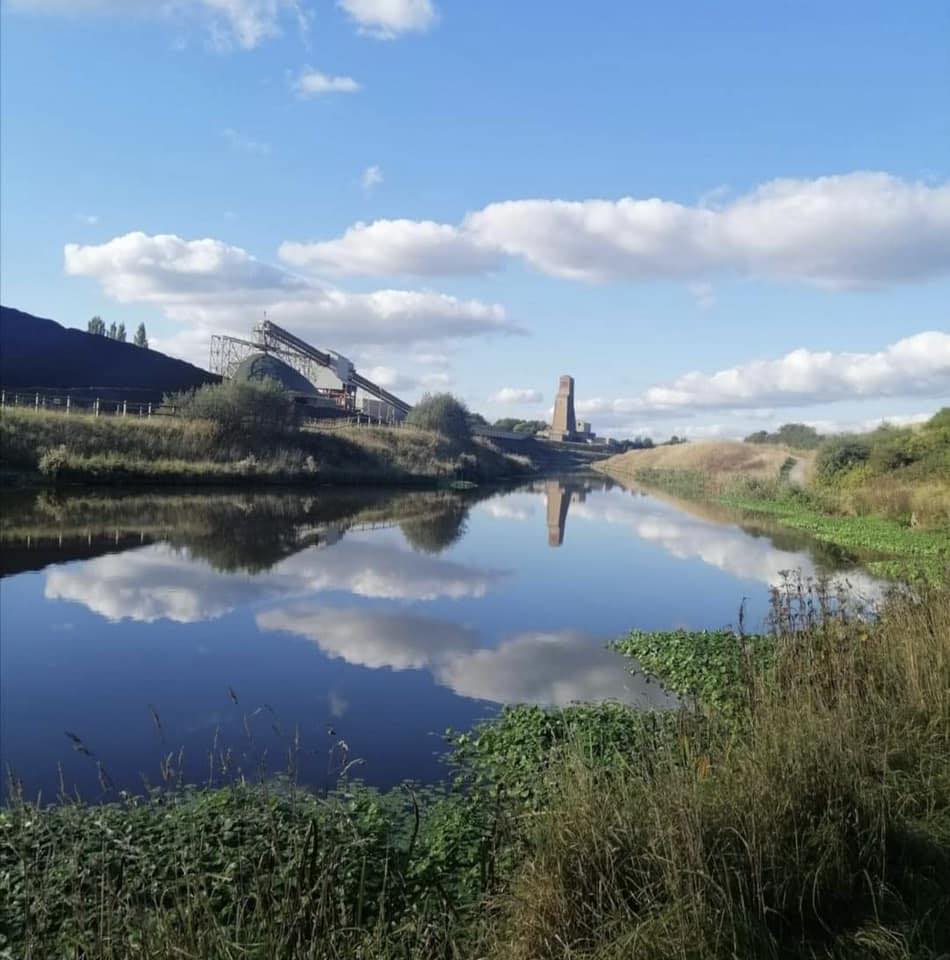
- The former course of the river was straightened by 'Verdin's Cut', creating Meadow Island, now a crushed salt mound
- The old wharf shows how busy the river used to be.
- The first part of the river path is surfaced with carboniferous limestone chippings. (The nearest limestone is from the Peak District)
- Further along the path is tarmac with igneous rock chippings
- In the red Triassic sandstone wall, grains of mica and quartz can be seen. The red colour is iron staining associated with the arid conditions of Triassic deserts.
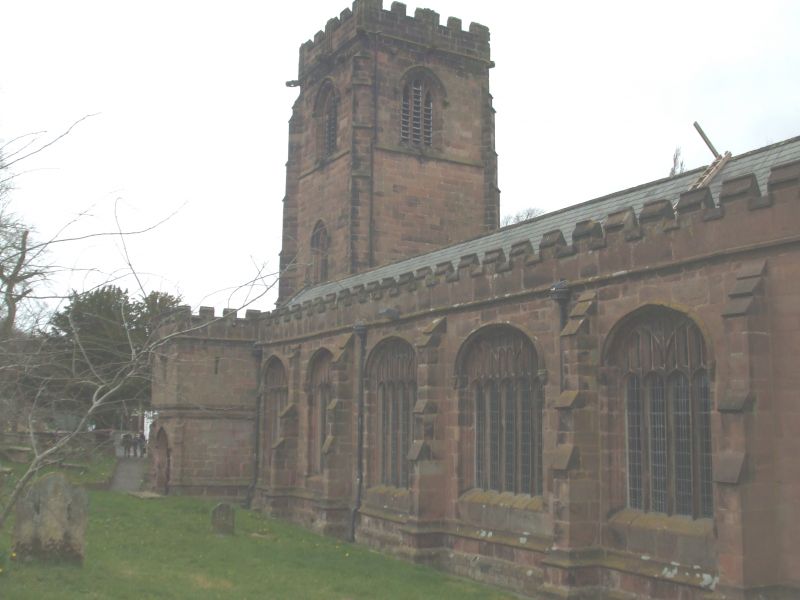
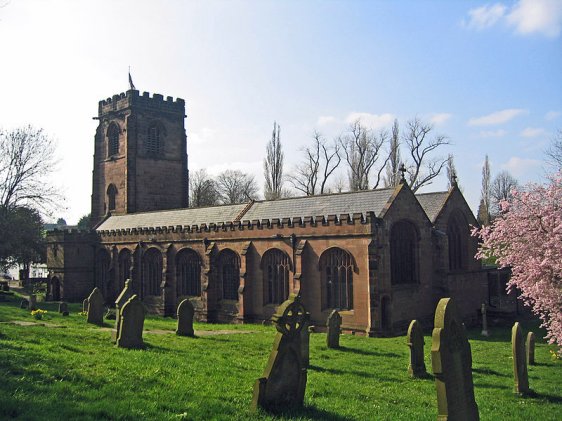
- Igneous, sedimentary, metamorphic and man-made rocks can be found at St. Chad's Church
- The gate posts are made of local Triassic red sandstone containing iron
- On the same pillar is a slate plaque
- The cobbles include igneous granites brought from the Lake District by ice
- The paving is older Carboniferous Namurian sandstone as is Ann Carey's headstone
- Many of the church wall blocks contain red Triassic sandstone with 'nobbles' where the sand grains are cemented by barytes, a very heavy, dense mineral
- The well has sandstone walls and is sunk into water-bearing glacial outwash sands
- Mary Elizabeth Moss Dean's headstone contains 2 granites of different coloured feldspars
- The military headstone is made from Portland Stone
- The headstones of Jane Williams and Walter Leak are iron-rich, basic igneous rocks but o different grain size
- Jane Robinson's headstone is made of Borrowdale Volcanic Tuff
- Charles Ronald Jones' headstone is made of larvikite
- Thelma Lamb's gneiss headstone shows deep red crystals
- Amelia Ravenscroft has a headstone of dolerite